Myofascial Trigger Point Injections (TPI)
A Trigger Point Injection (TPI) is an outpatient medical procedure designed to treat myofascial dysfunction and promote healing by disrupting the pain cycle, improving circulation, and promoting tissue recovery.
Treatment involves targeted intramuscular injections that often provide immediate pain relief and improved function.
Understanding Trigger Points and TPIs
What are Myofascial Trigger Points?
These are localized, hypersensitive areas (or “knots”) within the muscle tissue that lead to pain, tension, and reduced muscle function.
They often develop as a result of acute muscle trauma or repetitive micro-injury from overuse, chronic stress, poor posture, inactivity, or a sedentary lifestyle.
Common Areas for Trigger Points:
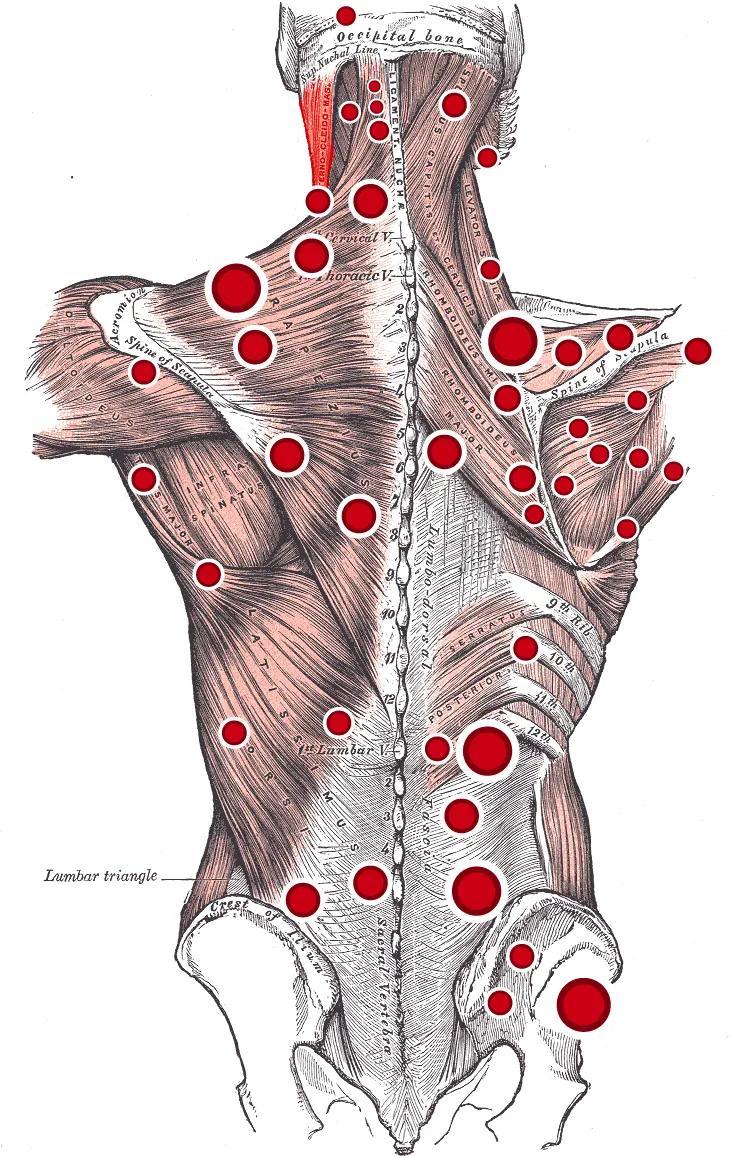
- Neck/Shoulder: Scalenes, Levator Scapulae, Trapezius (upper/mid), Sternocleidomastoid (SCM).
- Jaw: Masseter (main chewing muscle).
- Upper Back: Rhomboids, Latissimus Dorsi, Infraspinatus.
- Chest/Shoulder Girdle: Pectoralis Major/Minor.
- Lower Back/Pelvis: Gluteals, Piriformis, Quadratus Lumborum (QL).
How Do Trigger Point Injections (TPI) Work?
TPI involves the direct delivery of medication(s) into these specific “trigger points” to alleviate pain and promote muscle relaxation by:
- Deactivating the Trigger Points: TPIs directly target and deactivate the hyperirritable area within the muscle, relieving pain and promoting muscle relaxation.
- Disrupting the Pain Cycle: The injection often provides immediate relief by calming overactive nerves and breaking the underlying muscle spasm.
- Promoting Healing: The procedure helps increase blood flow and immune response to the muscle tissue, encouraging long-term healing.
- Medication Used: The mixture typically contains a combination of medications, such as local anesthetics (lidocaine), corticosteroids, and/or saline solution.
Safety Information
Low-Risk Treatment
This is a very low risk procedure, however you may experience some
temporary discomfort, faint bruising and/or numbness at the injection site.
Complications such as bleeding, infection and nerve or tissue injury at the injection site are uncommon.
Contraindications (Reasons NOT to proceed)
A TPI should not be performed if you have:
- An active infection or injury over the intended injection site.
- A trigger point that is not safely accessible by a needle.
Cautionary Factors
Your doctor will practice caution or discuss alternatives if you have any of the following:
- You are taking anticoagulation (blood-thinning) medications.
- Anatomical landmarks for the injection are difficult to identify.
- A known allergy to local anesthetics.
- A history of keloid formation (thick scarring).
- Severe fibromyalgia.
- A poorly controlled psychiatric disorder.
- You are highly anxious or needle-phobic.
When should I see my doctor?
If you have had a trigger point injection and notice any signs of infection —such as a fever, or warmth and redness around the injection site — please contact your healthcare provider.